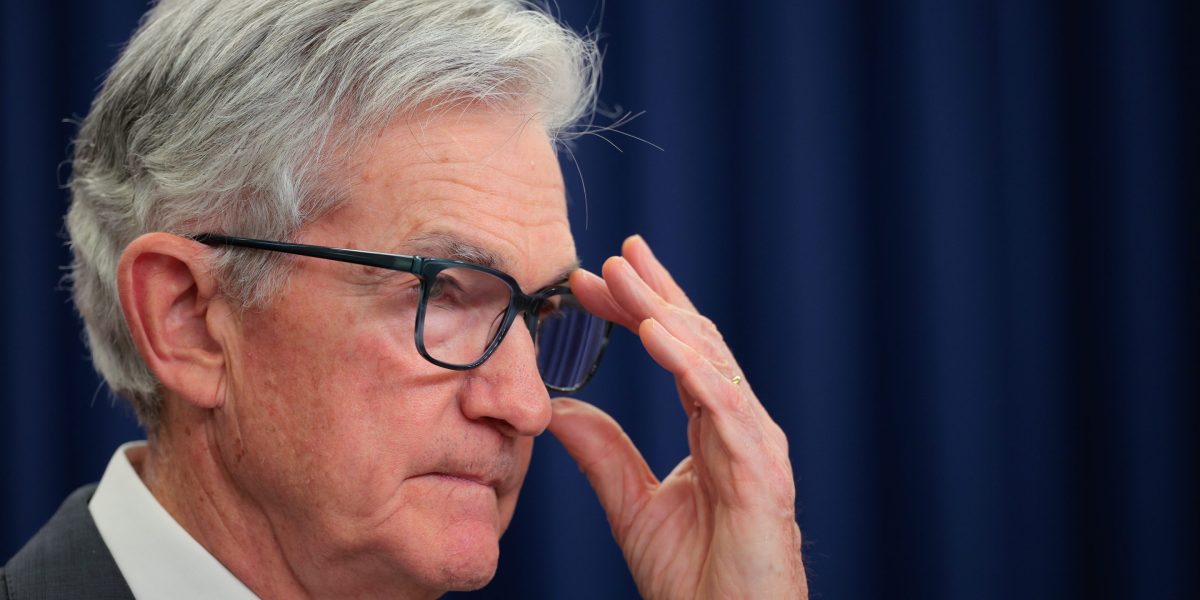
The Tesla chief executive made an offer worth more than $40 billion to buy Twitter and take it private.
The endgame?
Elon Musk, Twitter’s largest shareholder and biggest agitator, offered this morning to buy the rest of the social media company and take it private. His “best and final offer,” as he put it in a financial filing, is $54.20 a share, nearly 40 percent higher than Twitter’s stock price before the mercurial billionaire’s purchases became public.
The bid caps an extraordinary two weeks for Twitter and Musk, which began with the Tesla chief disclosing that he had built up a 9-plus percent stake in the company, framed at the time as a passive investment. Twitter offered him a board seat, but he turned it down, removing any restrictions on his actions. “After the past several days of thinking this over, I have decided I want to acquire the company and take it private,” Musk told Twitter’s chairman, Bret Taylor, in a communication made public today.
Musk said he had lost confidence in Twitter’s management to fulfill the company’s “societal imperative” as a platform for free speech. “Twitter has extraordinary potential,” Musk said. “I will unlock it.” He has hired Morgan Stanley as an adviser for the bid and won’t play a “back-and-forth game” with his offer, he said.
So is this for real? It may seem strange to ask about a person with a net worth of $270 billion, but it’s noteworthy that there are no details about the financing of Musk’s proposal. His offer values Twitter at more than $40 billion, but his wealth is mostly in Tesla shares, and that company puts limits on what he can borrow against the stock. If he needs debt financing, Musk has burned bridges with major lenders, like JPMorgan Chase, so his choice of Morgan Stanley, which has a smaller balance sheet, is notable. (Silver Lake’s Egon Durban, a Twitter director, has experience taking technology companies private, but his private equity firm has a standstill agreement with Twitter that seemingly limits it from participating in a takeover.)
No, seriously, is this for real? Musk will face questions about whether he has the capacity to personally buy out a social media giant given his day jobs as C.E.O. of Tesla and SpaceX. (Twitter’s co-founder Jack Dorsey faced questions about whether he could be C.E.O. of Twitter and Square, and stepped down from Twitter.) It is also not lost on market watchers that $54.20 a share is an echo of Musk’s infamous, ill-fated 2018 proposal to take Tesla private at $420 per share. (For the uninitiated, 420 is slang in cannabis culture, and often used by Musk in more jokey contexts.) More pertinently, Twitter’s shares have jumped in premarket trading on Musk’s offer, but remain well below his price — they traded higher than his bid for much of last year, challenging his assertion that “it’s a high price and your shareholders will love it.”
What happens next? Twitter said it would “carefully review the proposal to determine the course of action that it believes is in the best interest of the Company and all Twitter stockholders.” Dan Ives, an analyst at Wedbush, told DealBook that Musk’s approach “is going to put unbelievable pressure on the board from a fiduciary perspective.” Twitter’s board is likely to argue that the price is too low and question the strategic course of the company in Musk’s hands. (Musk, for example, has suggested that Twitter should get rid of advertising, its main revenue source.) The board could put in place a so-called poison pill, to prevent Musk or others from buying more shares, but other investors might not like that.
For a company with a fair few issues, including previous brushes with activist investors, the past few days have introduced an entirely new level of drama.
HERE’S WHAT’S HAPPENING
Starbucks may exclude unionized employees from new benefits. Howard Schultz, Starbucks’s interim C.E.O., told store managers that proposals meant to help lower attrition rates would not initially apply to newly unionized employees. The move raised questions from legal experts.
Amazon will ask third-party sellers for a “fuel and inflation surcharge.” The surcharge will add 5 percent to the fee for keeping inventory with Amazon to deliver to customers. FedEx and UPS have also raised fees in response to fuel costs.
The White House warns that supply chain problems won’t end with the pandemic. President Biden’s top economists say shortages and shipping bottlenecks will continue if America doesn’t invest in its supply chain. The report also calls on the government to do more to increase productivity and combat inequality.
The airline mask mandate continues. The C.D.C. said yesterday that travelers on planes and mass transit would be required to wear masks until at least May 3. Profits at airlines, which have asked for the mandate to be repealed, are rising as travel approaches prepandemic levels.
Read More About Elon Musk and Twitter
- How the Bid Unfolded: Twitter’s board went from installing a poison pill to agreeing to the sale to Elon Musk in just 11 days.
- Twitter’s Lawsuit: After Mr. Musk tried to back out of the acquisition of the social media platform, the company sued Mr. Musk, explaining that he cannot back out with these legal arguments.
- Service Disruption: Just as Twitter engaged in its heated legal battle with Musk, the company experienced a worldwide global outage that left users unable to access the platform.
- S.E.C. Inquiry: The Securities and Exchange Commission is continuing to investigate whether Mr. Musk properly disclosed his investment in Twitter and his intentions for the company.
Economists call China’s official growth target unrealistic. Experts say China’s “zero Covid” policy will make it nearly impossible to achieve 5.5 percent G.D.P. growth this year. About a third of China’s population, or 373 million people, are in some sort of pandemic lockdown.
Banking on consumers
A key part of the U.S. pandemic recovery playbook has been to pump money into the pockets of consumers. It’s mostly worked. But this week’s first-quarter results from big banks reveal warning signs about the state of the U.S. consumer, whose spending accounts for more than two-thirds of the country’s economic output.
Profits are under pressure. At JPMorgan Chase, the country’s largest bank, earnings in its consumer division fell 57 percent from a year ago. Profits at the consumer banking units of Wells Fargo and Citigroup fell by 16 percent and 23 percent, respectively, they reported today. Jamie Dimon, the C.E.O. of JPMorgan, told analysts on a call yesterday that he was monitoring inflation, rising interest rates and war in Ukraine. “Those are storm clouds on the horizon that may disappear,” he said, or “they may not.”
Riskier lending is raising concerns. The 60-day delinquency rate on subprime auto loans in the U.S. was nearly 5 percent in February, the highest since early 2020 and up from under 4 percent a year ago. What’s more, investors are balking at risky loan deals, and some “Buy Now, Pay Later” lenders, which thrived under pandemic restrictions, have seen their shares plunge: Affirm’s stock is down 60 percent this year.
But consumers are still spending. Yesterday, Bank of America reported that consumers spent 11 percent more with its credit cards in March than a year earlier. Spending was up 15 percent in the first eight days of April. The banks’ recent results suggest, however, that there is a limit to what consumers can spend without trouble. “Consumer credit has been free for the banks, and that’s not going to be the case anymore,” said the banking industry consultant Christopher Whalen. “Consumers are not going to drive the economy as they have been.”
“These companies are fine during a very ebullient and frothy capital markets environment. The world has changed significantly in the past 60 days.”
— Ken Smythe of Next Round Capital Partners on the prospects for delivery start-ups, whose pandemic bump in orders has started to tail off. Gopuff, based in Philadelphia, has raised more than $3 billion in funding and thinks it can do rapid delivery differently.
Using antitrust law to protect workers’ pay
The Justice Department is leaning on an old law in a new way. The Sherman Act of 1890 prohibits corporations from conspiring to hurt consumers. In a first, the government has brought a series of criminal cases accusing employers of colluding to hold down wages, The Times’s Eduardo Porter reports.
If the courts agree, it could drastically alter the relationship between workers and employers. The department has filed six criminal cases under antitrust law. The push began late in the Trump administration, and President Biden has picked it up with a vengeance.
Corporate America is alarmed. “There is a role for antitrust in labor markets,” said Sean Heather, a senior vice president for antitrust at the U.S. Chamber of Commerce. “But it is a limited one.”
Is JPMorgan’s new weekend policy an improvement?
Last year, financial firms across Wall Street pledged to manage employee workloads better after junior bankers spoke out about grueling hours. But have the changes helped combat burnout?
The debate continues at JPMorgan, which has a new vacation policy for junior investment bankers: 10 federal holiday weekends off, and analysts and associates can choose one weekend each quarter to log off and not be contacted if work comes out. Previously, the bank allowed these workers to protect one weekend a month.
JPMorgan said its policy was the best of all worlds. There are assured days off for weekends around holidays like Thanksgiving, Memorial Day and Juneteenth, in addition to four weekends a year that workers choose themselves.
But not all bankers agree. They say someone always needs to be available during the federal holiday weekends if work comes up (like a big deal). And now they have less choice to set aside other weekends for personal events like weddings.
Burnout became an industrywide debate amid soaring deal volume last year. Banks responded with policies to improve working conditions. For its part, JPMorgan has encouraged its bankers to leave the office by 7 p.m. on weekdays, among other things. But long hours and unpredictable workloads have long been part of the reality of the industry. Is JPMorgan’s new vacation policy an improvement or simply more of the same?
Speaking of time off, DealBook is taking a break tomorrow for the Good Friday holiday.
THE SPEED READ
Russia-Ukraine war
-
The U.S. will send a further $800 million worth of military assistance to Ukraine. (NYT)
-
The British territory of Jersey froze $7 billion in assets believed to belong to the Russian oligarch Roman Abramovich. (NYT)
-
Germany has seized the world’s biggest superyacht, saying it’s owned by the Russian oligarch Alisher Usmanov. (Insider)
Deals
-
The activist investor Blackwells Capital is calling again for Peloton to pursue a sale. (CNBC)
-
Blackstone and the Benetton family have submitted a $20 billion offer for Atlantia, the Italian infrastructure group. (FT)
-
A shareholder is suing to block Alleghany’s $11.6 billion takeover by Berkshire Hathaway. (Reuters)
Policy
-
Mick Mulvaney, a former Trump administration official, will advise Astra Protocol, a crypto compliance firm. (Bloomberg)
-
The vaping giant Juul has agreed to a $22.5 million settlement with Washington State over accusations of marketing to underage users. (Bloomberg)
-
Meet Gerald Migdol, the Harlem property developer at the center of the federal investigation that took down New York State’s lieutenant governor, Brian Benjamin. (NYT)
Best of the rest
-
In several states, teachers have received their biggest raises in decades. Will it improve schooling? (NYT)
-
Intel has a lot of work to achieve its net zero emissions goal. (Protocol)
-
“America’s Highest Earners and Their Taxes Revealed.” (ProPublica)
We’d like your feedback! Please email thoughts and suggestions to dealbook@nytimes.com.
Source: nytimes.com