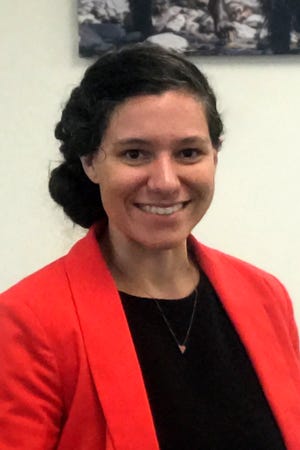

For 15 years, charges of aggravated menacing and domestic violence followed Betsy Davis wherever she went.
If she applied for a job, prospective employers deemed her past too risky for a position.
“It hampered everything I did,” said Davis, 34, of Whitehall. “It didn’t matter what I did.”
For people such as Davis, however, the Legal Aid Society of Columbus is there to help.
The organization, in conjunction with JPMorgan Chase, is holding a free record-sealing clinic from 10 a.m. to 2 p.m. July 23 at the Chase branch at 3233 Cleveland Ave. in Northland.
To register, which is required, one must call the society at 614-241-2001.
Those who register must live in Franklin County.
Meagan Van Brocklin, managing attorney for the Re-entry Income Security Education (RISE) team for the Legal Aid Society of Columbus, said record sealing can be a complex process but involves a few basic steps – most offenses are generally one to three years old from the date the case is closed, fines have paid and restitution made and probation is over and no pending or open cases exist.
Attorneys on-site will help walk-in clients through the process and help them prepare a request for the sealing of their criminal records, which costs $50 upon filing with the courts, she said.
A court date is set and a judge is to take into consideration the offender’s criminal record history, whether the offender is rehabilitated to the satisfaction of the court and whether the offender’s interest outweighs the state’s interest in keeping the record open, according to Van Brocklin.
“Each case is evaluated based on the individual’s record,” she said.
Others deemed currently ineligible for criminal record sealing by LASC will be given instructions on how to proceed, according to Van Brocklin.
The benefit to having past offenses sealed is tremendous to the offender, who might have trouble finding a job, housing or volunteering at a school, she said.
About one in three Ohioans has a criminal record of some kind, according to information supplied by the LASC.
One in 11 has a felony conviction, the information said. That has contributed to more than $3 billion in forgone wages as recently as 2017, according to the legal aid society.
“It really kind of destabilizes a person with a record and their whole family,” Van Brocklin said.
“Those (offenses) really hold people back from earning a living wage.”
“Helping individuals expunge their records is one step toward creating equitable access to meaningful jobs,” said Nan Gibson, executive director at the JPMorgan Chase Policy Center. “Supporting these…clinics is just one part of the commitment JPMorgan Chase is making to helping more people get a second chance.”
Davis said she turned to the Legal Aid Society of Columbus in October and ultimately had her records sealed by a judge.
Now, she says, she’s a straight-A student with a 4.0 GPA at the Ultimate Medical Academy, studying billing and coding.
Davis encourages other offenders to seek assistance from LASC.
“Don’t consider it, just do it,” she said.
gseman@thisweeknews.com
@ThisWeekGary
Source: dispatch.com