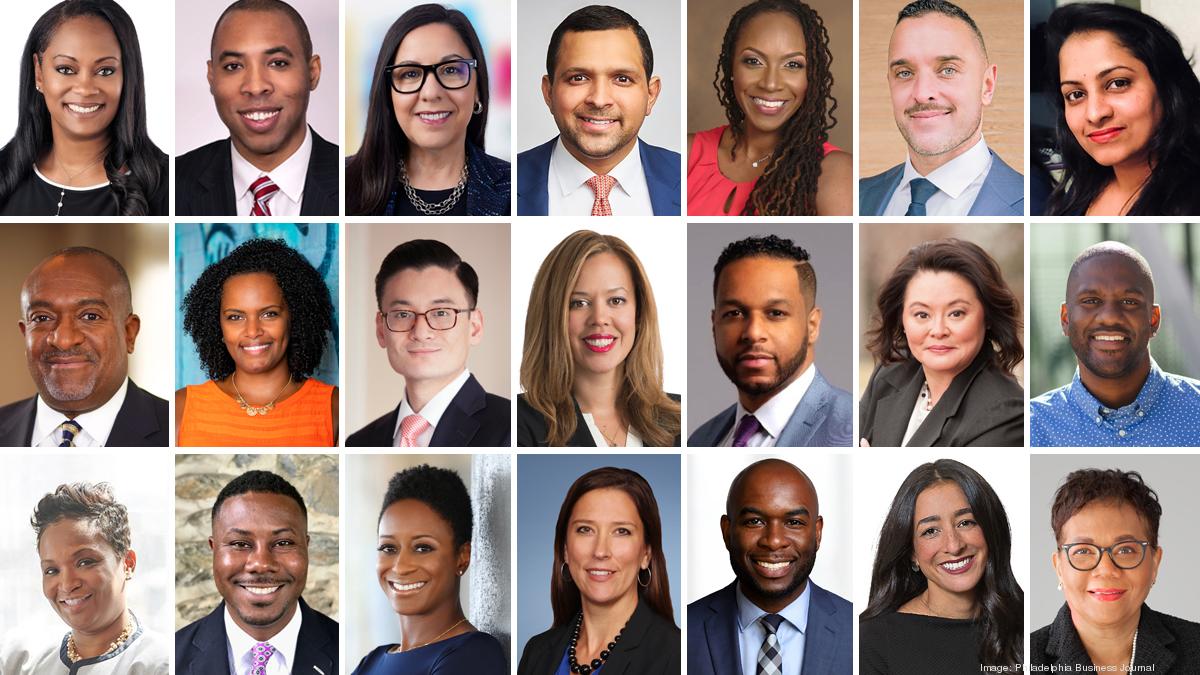

We asked our 2022 Diversity in Business honorees what they believe to be the biggest barriers to inclusion in Greater Philadelphia. Here is what they had to say:
Poverty. Twenty-three percent of Philadelphians live on less than $26,000 per year. Thirty-two percent of Philadelphia’s children live in poverty. Income, housing, food instability and inadequate educational opportunities create generational poverty. For many of our neighbors, daily life is about survival. – Donna Bailey, chief integrated health services officer, Public Health Management Corp.
A lack of awareness is the biggest barrier of inclusion, not only in Greater Philadelphia but worldwide. When people learn about each other’s experiences, we begin to empathize, sympathize and address our own biases. Awareness also motivates us to use our resources and influence make positive change. – Kehinde Barkley, professional services solution Lead, Qlik
Lack of advocacy to help accelerate the pace of change for the next generation of leaders. The potential in the legal industry is enormous, and I look forward to doing my part in helping to generate solutions and strategies to sustain diversity, equity and inclusion progress for the long run. – Craig Beazer, executive vice president and general counsel, Lincoln Financial Group
Education. – Maleda Berhane, CEO and principal, AR Spruce
I think so much of it starts with education and breaking down stigmas and beliefs that have unfortunately rooted themselves within so many people’s minds. Sadly, old attitudes die hard and we have people who for one reason or another are just completely resistant to change, self-reflection, and embracing those from a background different than what they’ve always experienced. – Tommy Berner, community business development officer, TD Bank
A belief that the work of creating more inclusive environments is the primary responsibility of those from underrepresented backgrounds or of those who have been historically excluded. Inclusion belongs to all of us and requires active participation and buy-in from all levels of an organization and a community. – Melanie Carter, partner, Blank Rome
I have learned through all the DEIB work I’ve been a part of that each of us can be a barrier. It’s our inability to continually self-reflect, check ourselves around our assumptions, ask others for feedback, and be vulnerable. We must start with ourselves and recognize that inclusion presents itself every day. Every day we get the chance to be curious, learn from others and appreciate the similarities and differences we can leverage. – Christina Estrada, senior vice president, chief human resources and learning officer, Goddard Systems
Far too many people have not had experiences with people who identify differently. In order to create more inclusive spaces, we need to educate and expose each other to different dimensions of diversity. Understanding and appreciating our uniqueness is the key to inclusion. – Lloyd Freeman, chief diversity and inclusion officer, Buchanan Ingersoll & Rooney
My “barrier” would be that there are so many great individuals in the Greater Philadelphia area making an impact on DEI issues. Many of them may work for associations whose mission statement is to enhance DEI awareness on a public and national (or global) level. I’m just a small law firm and just one person down here in Marlton, New Jersey, and I just hope that what I have done or tried to do has impacted DEI awareness for at least someone. – Shereen Chen Gray, managing partner, Chen Gray Law Group
Treating inclusion as a quota or “a box to check.” DEI is not a statistic or number to achieve within your organization. It is rather a philosophy and credo with which an organization should and must lead. – Abe Ibrahim, market executive and regional vice president, Northwest Bank
Unconscious bias. Unconscious bias affects how people act with a different race. It can influence our actions and decisions, such as how we interact with someone or a particular group, whom we hire or promote, what advice we give, and what organizations we choose to support. – Melanie Kennedy, executive vice president and chief human resources officer, American Water
Philadelphia is a minority majority city though the health and economic disparities among the races are staggering. “Business as usual” and lack of accountability for changing the disparities are the greatest barriers to inclusion. – Tonya Ladipo CEO and founder, The Ladipo Group
Unfortunately, the lack of access to a quality education presents a substantial barrier to opportunity for many children in the Philadelphia area and results in significant achievement gaps. – W. John Lee, partner, Morgan Lewis & Bockius
When the focus is solely on how diversity and inclusion hits the bottom line and that is the main driver for DEI efforts, we miss out on true inclusivity. However, I think the biggest barrier to inclusion in Greater Philadelphia is education and resources for students. We cannot diversify the corporate world without educated people from all walks of life. In my opinion education, is the key to breaking all barriers. – Valerie Lyons, chief marketing and business development officer, Weber Gallagher
There are a number of systemic and historic issues in the city that were addressed in varying degrees but never fully solved. This is also true of every major city in America. These problems have metastasized, matured and converged, making it quite difficult to pick the appropriate starting place on any issue(s). – Michael O’Bryan, founder, Humanature; distinguished resident fellow, Lindy Institute for Urban Innovation
In the professional sphere, the biggest barrier is the lack of seats for excluded groups at the biggest tables. Historically excluded groups will remain excluded unless their members have the positions within key institutions and latitude necessary to change that reality. – Simeon Poles, associate, Duane Morris
The biggest barrier to inclusion in Greater Philadelphia is access to information. Communities must know what is available to them. Our city has the fourth largest African American community in the United States and the second largest Jamaican American population in the country. Together, we must be willing and open to change how we view diversity, looking at diversity as an opportunity and embrace the rich cultures, unique life experiences and different perspectives it brings to the city and region. Furthermore, we need to develop authentic relationships between community, government and public systems. Inclusive practices also need to be prioritized in schools, where we have the greatest opportunity to influence mindsets, shape the meaning of diversity and impact the future of our community. – Brinda Rajaraman, managing director, Accenture
Lack of corporate leadership exposure/training as well as mentorship, sponsorship, and advocacy for diverse talent; lack of diverse representation on influential leadership teams to advocate for unique perspectives and diversity of culture and experiences; failure to create and implement guardrails to ensure organizational behavioral changes of inclusivity; and the cultural norms embedded in the fabric of many organizations where executive presence and perspective historically tends to reflect white middle-aged males are some of the biggest barriers to inclusion. Recent data demonstrate that inclusive and diverse cultures lead to more innovation and better outcomes, and companies in Philadelphia are increasingly working to break down barriers to inclusion, but the reality is gaps still exist and there’s more progress to be made. – Dr. Tania Small, vice president, global medical affairs therapeutic area head of oncology, chair of the Diversity, Equity, and Inclusion R&D Council, GSK
Old school thinking and pre-established social norms will continue to prohibit inclusion in Philadelphia. These things will only change with time as the focus of DEI remains in the spotlight. – Heshan Wanigasekera, vice president, banker, J.P. Morgan Private Bank
Source: news.google.com