
Base metals markets have experienced some eye-watering volatility in recent years. Copper, for example, rose 125% between March 2020 and April 2022 before falling in 2023, while nickel and lithium both hit record highs in 2022 before plunging in 2023, lithium losing 80% of its peak value by the end of 2023.
Facing such price action, many producers and consumers searched for more flexible hedging programmes. Bank of America, Energy Risk’s 2024 Base metals house of the year, worked with companies in multiple industries to create much-needed new strategies, many of which were driven by the imperatives of the energy transition.
Increasingly, the fundamentals of metals markets are being influenced by the transition as it generates demand for battery metals such as lithium and cobalt, as well as steel and copper for the production of renewables infrastructure.
After adding cobalt and lithium to its product slate in 2022, Bank of America now offers hedging and risk-management services for the full suite of battery metals used in electric vehicle (EV) production, as well as other forms of energy storage. For example, the bank has been helping original equipment manufacturers (OEMs) in the auto industry to hedge their battery metal exposure as they build out their EV production platforms.
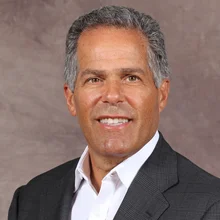
George Cultraro, Bank of America
“We see client interest from both US and European auto OEMs looking to manage this risk, and have helped clients with hedging solutions for lithium, nickel and cobalt using the listed contracts on the LME and CME,” says Brett Orlando, head of energy transition within the commodities team at Bank of America.
Client needs have ranged from hedging longer-dated forward purchases of nickel, to locking in forward cobalt prices for the coming year or hedging short-dated purchases of lithium. “We want to support a market forming around these listed contracts, creating liquidity and offering price transparency on the forward curve,” Orlando adds.
Bank of America – which also performed strongly in the metals categories in the 2024 Energy Risk Commodity Rankings survey – uses the combination of its strong focus on the energy transition and its geographical footprint to offer risk management services in other parts of the metals complex. In the offshore wind market, particularly in Europe, it has supported wind-farm developers’ hedging needs.
“A huge amount of steel and copper is required to build offshore wind turbines and connect them to the grid. And investing in offshore wind is a central part of land-constrained Europe’s efforts to decarbonise the power-sector grid,” Orlando says.
The need to manage the significant increases in raw material costs in recent years has compressed margins and introduced a new level of price risk for the utilities that are investing billions in these offshore wind farms. But changing market conditions can make projects uneconomic. “We have already seen instances of utilities exiting offshore wind markets in the face of rising costs,” Orlando continues.
Bank of America works with utilities to manage the rise in raw material costs actively, tailoring its approach according to the regime of the client. In the UK, for example, utilities must bid in an auction to secure a guaranteed price from the government for the electricity they generate from offshore wind. “When we help these clients manage those raw material inputs it allows them to submit a more competitive bid,” Orlando says.
The team spends time working with these clients to unpick their exposures and work out which risks can be more actively managed and how. “We want to ensure these utilities are not just price-takers on the raw material inputs, but rather that these costs are something they can proactively manage,” he adds. “And, in that way, we feel we’re really helping to accelerate the transition to clean energy.”
Indeed, effecting the energy transition is now embedded into the bank’s commodities business, says George Cultraro, global head of commodities trading at Bank of America, adding that all the team’s discussions with clients about risk management are now aligned to reducing carbon and accelerating the energy transition in some way.
Source: risk.net