
Bank of America Corp nearly doubled its forecast for the nation’s economic growth this year, adding to a slew of upgrades even after a rip-roaring last year propelled by demand for artificial intelligence (AI).
The firm lifted its projection to 8 percent from 4.5 percent on “relentless global demand” for the hardware that Taiwanese companies make, according to a note dated yesterday by analysts including Xiaoqing Pi (皮曉青).
Taiwan’s GDP expanded 8.63 percent last year, the fastest pace since 2010.
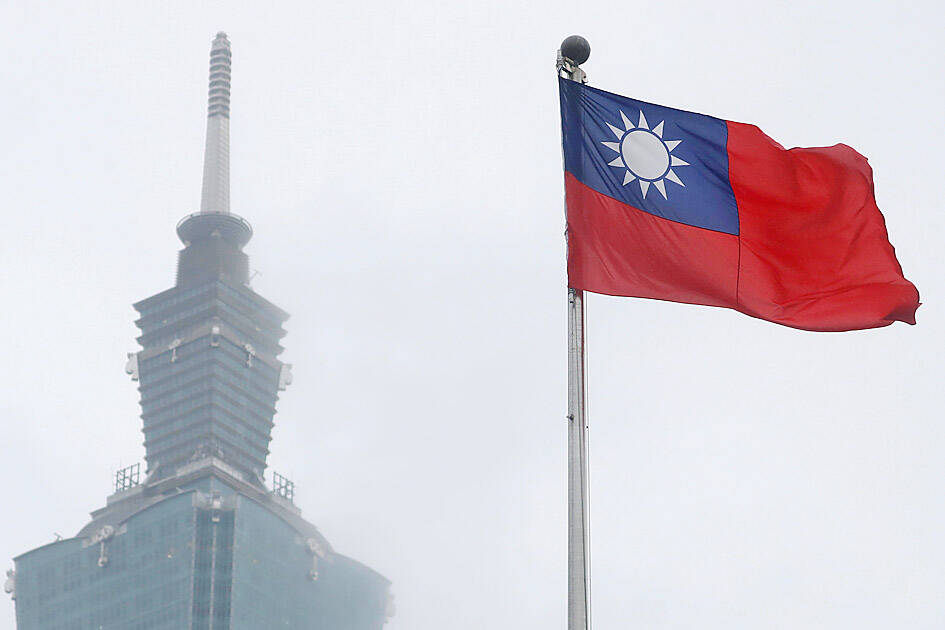
Photo:AP
The increase “reflects our sustained optimism over Taiwan’s technology driven expansion and is reinforced by several recent developments,” including a more stable currency, a trade and investment deal with the US and spending by technology companies, Bank of America said.
Societe Generale SA yesterday also raised its growth forecast for this year to 6.3 percent from 3 percent.
Economist Michelle Lam (林雪潔) wrote in a note that “another robust year for Taiwan’s tech led exports” is expected.
The financial institutions join Goldman Sachs Group Inc, Barclays PLC and others in turning more optimistic on Taiwan even after its economy clocked one of the fastest rates of expansion globally.
Officials in Taipei have said that annual growth in the fourth quarter of last year came in at more than 12 percent, the quickest pace since 1987.
Underscoring optimism that AI would continue to shine this year, Taiwan Semiconductor Manufacturing Co (TSMC, 台積電) — Nvidia Corp’s main chipmaker — said it is earmarking as much as US$56 billion for capital spending, a projection that was stronger than anticipated.
TSMC yesterday reported a 36.8 percent annual rise in January revenue to NT$401.255 billion (US$12.7 billion), above the 30 percent revenue growth the company expects for the full year.
The monthly sales last month set a record high in the company’s history, but the annual comparison would have been affected by the Lunar New Year holiday, which last year fell in January.
Bank of America said that it does not expect the central bank to raise its policy rate this year, “given still subdued inflation, stagnant services wages, weak non-tech sectors and continued cooling in the real-estate market.”
However, Bank of America and Societe Generale see a chance of tighter monetary policy next year after a pause in place since March 2024. Lam predicts two rate hikes of 12.5 basis points each next year, as part of what she called “a shallow tightening cycle.”
“There is scope for rates to drift higher over time, even if 2026 will likely remain steady,” she said. “Key risks to this outlook include potential Section 232 tariffs” — referring to a possible outcome of a national security investigation being conducted by the US — “and the bursting of the AI bubble.”
Bank of America also highlighted risks to its forecasts from issues such as “geopolitical dynamics.”
Source: taipeitimes.com