
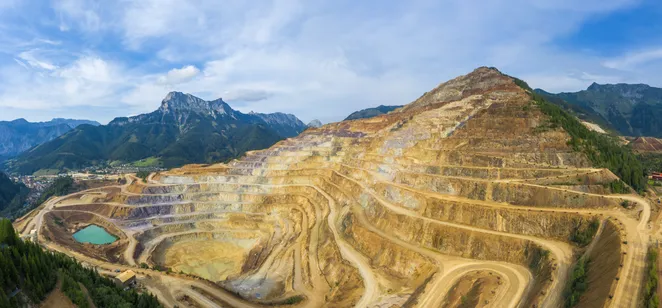

Iron ore prices have plunged significantly recently, hitting more than two-year lows, as the metal fell more than 11% this past week, and almost 17% over the last month. At the time of writing, iron ore was trading around CNY 598 per tonne. This was mainly due to the state of the still struggling housing industry in China, as well as the ongoing rigid zero-COVID curbs in place.
Furthermore, China had also cut steel output, in Hebei, which is the top producer of the metal, for about a week, between October 14th and 22nd. This was done in order to cut down on air pollution for the week of the Communist Party Congress, which was held in Beijing, as Hubei is quite close to Beijing. China has also implemented a similar tactic during the Beijing Olympics which took place earlier this year.
Iron ore prices are trading near 2-year lows
Why is the price of iron ore plunging so much lately?
Iron ore is currently on track for its seventh weekly loss in a row, which marks the longest losing streak in 7 years. This is mainly due to disappointing demand from the steel industry, primarily due to the energy crisis still ravaging China.
As steel is one of the most energy consuming metals to produce, several manufacturers are steadily finding it unaffordable to keep manufacturing it. This has led to a number of smelter closures, especially as profit margins for vital products such as hot-rolled coil and rebar have fallen significantly.
This has been highlighted by expectations of steel demand picking up following the short-term restrictions in Hubei earlier this month, however, the market is yet to see that happen. Furthermore, China’s construction sector, which has been struggling since the near-collapse of Evergrande last year, has still not recovered satisfactorily.
The ongoing rigid zero-COVID restrictions in place have also further pressurised steel factories, as well as rising COVID-19 cases leading to increased absenteeism and expensive healthcare.
This has combined with iron ore supply currently being in a seasonally strong period, thus leading to oversupply, as stockpiles build up at Chinese ports, with few buyers.
With the re-election of Xi Jinping for the third term, investors are also worried that the construction and manufacturing industries may see further setbacks, as the National People’s Congress has been quite vocal about putting national security ahead of economic growth.
China’s NBS Manufacturing PMI for October was also disappointing, falling from about 50.1 in the last month, to about 49.2 in October. This has led to increased speculations of the Chinese economy not recovering at all as expected, thus leading to lower iron ore demand.
However, there may be a silver lining, as Citigroup (C) believes that the Chinese construction sector may well have seen rock bottom now and the only way to go is up. Hence, we may soon see steel demand picking up once again as construction activities build up pace.
What is your sentiment on TSI?
Bullish
or
Bearish
Vote to see Traders sentiment!
What are the main iron ore miners impacted?
Rio Tinto (RIOgb), one of the most prominent global iron ore miners has already been significantly impacted by falling iron ore prices. The miner has already dipped about 10.6% since the start of the month, Furthermore, shares have also been pressurised by the company deciding to build its own software instead of relying on outsourcers.
Zijin Mining (2899), another notable iron ore miner based in China, has also seen a decline of over 20% since mid-September, as the company struggles with the sagging construction sector in the country. Not only that, but it is also currently embroiled in a dispute over the world’s biggest lithium deposit in Central Africa.
Kumba Iron Ore (KIROY), based in South Africa, has also seen a drop of about 27.6% since the end of August. The miner was also further disrupted by Transnet’s port and rail services strike this month, which resulted in lower iron ore production.
What is the outlook of iron ore?
According to Fitch Solutions, mine output for iron ore is expected to increase by an average of about 2.7% per year from 2022 to 2026. This is expected to amount to a yearly production of about 361.7 million tonnes in 2026.
China is expected to further secure iron ore import supply by investing extensively in iron ore mines abroad, one of the biggest beneficiaries likely being the Simandou iron ore mine in Guinea. Furthermore, Australia is likely to see a slowdown in growth in the coming years, although Brazil is likely to offset this with faster growth.
Investors are still keeping a close eye on the National People’s Congress’ new policies regarding COVID-19 and economic growth, as they will prove to be key in determining iron ore prices in the coming few months. Furthermore, the rate of recovery in China’s iron ore sector, as well as the supporting stimulus measures are also important bolstering factors for iron ore prices.
Related reading
Rate this article
Share this article
Source: news.google.com




Comments
There are currently no responses for this story.
Be the first to respond.